For nearly five centuries, a grim complex of buildings on Borough High Street in Southwark housed one of England's most notorious debtors' prisons. The Marshalsea was a place where poverty itself became a crime, and its legacy would haunt a young boy who grew up to become one of literature's greatest voices.
A Prison on the High Street
The Marshalsea occupied two sites on what is now Borough High Street. The first prison, which stood from 1373 until 1811, was located at number 161, between King Street and Mermaid Court. When that building became too dilapidated, the prison moved 130 yards south to number 211, where it remained until its closure in 1842.
The prison served the Marshalsea Court, which had jurisdiction over crimes committed within twelve miles of the monarch's residence. Originally intended for cases involving the royal household, it evolved into primarily a debtors' prison, holding men and women who could not pay their creditors.
Life Inside: Two Classes of Misery
The Marshalsea operated on a brutal two-tier system. Those who could pay for the privilege occupied the "Master's side," where conditions were relatively comfortable. These prisoners had access to a bar, shop, and restaurant. They could bring their families with them, and entire communities developed within the prison walls.
For those without means, the "Common side" offered a very different experience. In just nine small rooms, more than 300 prisoners were crammed together in squalor. Disease was rampant; a parliamentary investigation in 1729 found that 300 inmates had starved to death within a three-month period, with eight to ten dying every twenty-four hours during warmer weather.
New arrivals faced the "garnish" system, in which they were bullied into giving money to established prisoners. Those who refused risked being stripped naked and having their clothes tossed over the main gate. The prison even maintained a "strong room," a windowless shed near the sewer where prisoners were tortured with thumbscrews, skullcaps, and leg irons.
The Dickens Family Crisis
The Marshalsea might have faded into historical obscurity had it not been for a £40 10s debt owed to a baker named James Kerr. On 20 February 1824, John Dickens, a Navy Pay Office clerk, was committed to the Marshalsea for this unpaid bill. He would remain there for three months, until his release on 28 May 1824, following the death of his mother Elizabeth, who left him £450 in her will.
The impact on twelve-year-old Charles was immediate and devastating. Forced to leave school, he was sent to work ten-hour days at Warren's Blacking Warehouse on Hungerford Stairs, earning six shillings a week pasting labels on boot blacking pots. He lived first with Elizabeth Roylance at 112 College Place in Camden Town, and later in Lant Street, Southwark, with Archibald Russell.
Every Sunday, young Charles would visit his father at the Marshalsea, often accompanied by his sister Frances. In later years, he would recall that his mother was "warm for my being sent back" to the factory work, a memory that left a permanent mark. "I never afterwards forgot," he wrote, "that my mother was warm for my being sent back."
From Trauma to Literature
The experience of his father's imprisonment and his own child labour would become foundational to Dickens's literary work. The character of Wilkins Micawber in David Copperfield, imprisoned for debt at King's Bench prison, was drawn directly from John Dickens. Mrs Pipchin in Dombey and Son was based on Elizabeth Roylance, and the Garlands in The Old Curiosity Shop on Archibald Russell.
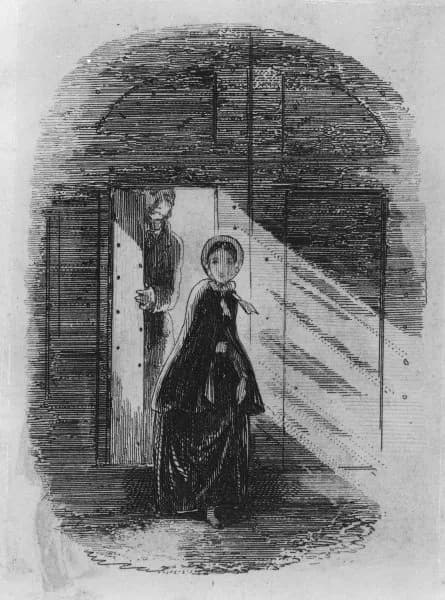
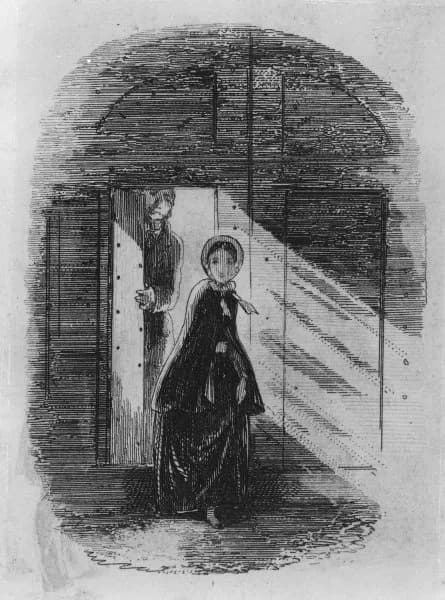
But it was Little Dorrit, published in monthly instalments from 1855 to 1857, that placed the Marshalsea at the very centre of English literature. In the novel, Amy Dorrit;Little Dorrit herself;is born and raised within the prison walls. Her father, William Dorrit, has been imprisoned for debt for over twenty years, and Arthur Clennam also finds himself confined there later in the story.
Dickens dedicated Little Dorrit to the artist Clarkson Stanfield, and the novel stands as his most direct exploration of the debtors' prison system he knew so intimately.
Reform and Closure
The Marshalsea had long been a target of reformers. James Oglethorpe MP led a Gaols Committee investigation in 1729 that exposed the horrific conditions, though the chief jailer, William Acton, was acquitted of murder charges. Prison reformer John Howard visited on 16 March 1774 and reported the absence of an infirmary and the continuing practice of the garnish system.
By the nineteenth century, the injustice of imprisoning people for debt became increasingly difficult to defend. In 1842, the Marshalsea was abolished by Act of Parliament, along with the Fleet Prison. The site was sold and largely demolished in the 1870s.
What Remains Today
Walking along Borough High Street today, there is little to indicate that one of England's most infamous prisons once stood here. The long brick wall that marked the prison's southern boundary still exists, and parts of the Keeper's house, kitchen, and eight dwelling houses were incorporated into George Harding and Sons, Ltd., hardware merchants at the rear of 207 Borough High Street.
A Southwark Council plaque on the site recalls "the crowding ghosts of many miserable years." A public library now occupies part of the former prison grounds.
As Dickens himself wrote of the Marshalsea's destruction: "it is gone now...and the world is none the worse without it." Yet in another sense, the prison endures;not in brick and mortar, but in the pages of Little Dorrit and the other works it inspired, forever fixed in the literary imagination as a symbol of institutional cruelty and human resilience.
For Southwark residents and visitors alike, the Marshalsea serves as a reminder that history is never far beneath the surface of London's streets. The stories of those who suffered within its walls, and the boy who walked through its gates every Sunday, continue to resonate nearly two centuries after the prison itself disappeared.